Module 2: Asbestos and Asbestos-containing Materials
Non-friable Asbestos
Friable Asbestos
Module 3: Health Risks of Asbestos Exposure
Module 4: Risk Management of Asbestos-containing Materials
Identification
Exposure and Risk Evaluation
Control Methods
Module 5: Good Practices in Managing Asbestos Exposure
Module 6: Removal of Asbestos-containing Materials
Roles and Responsibilities
Notification and WSH Risk Assessment
Plan of Work, Site Preparation
Methods: Wet, Glove Bag, Injection
Personal Protective Equipment (PPE)
Decontamination, Waste Disposal
Air Monitoring (Initial, During, Post-operation)
Module 7: Training Workers
Module 8: Medical Surveillance
you will learn how:
Understand the different types of asbestos-containing materials, including non-friable and friable asbestos, and their associated risks.
Learn about the health risks of asbestos exposure and its potential impact on workers.
Explore effective risk management strategies for handling asbestos-containing materials, including identification, exposure evaluation, and control methods.
Implement good practices in managing exposure to asbestos-containing materials to protect workers and the environment.
Understand the process of removing asbestos-containing materials, including roles and responsibilities, notification requirements, and conducting WSH risk assessments.
Prepare for asbestos removal work with proper site control, tool and equipment selection, enclosures, and decontamination facilities.
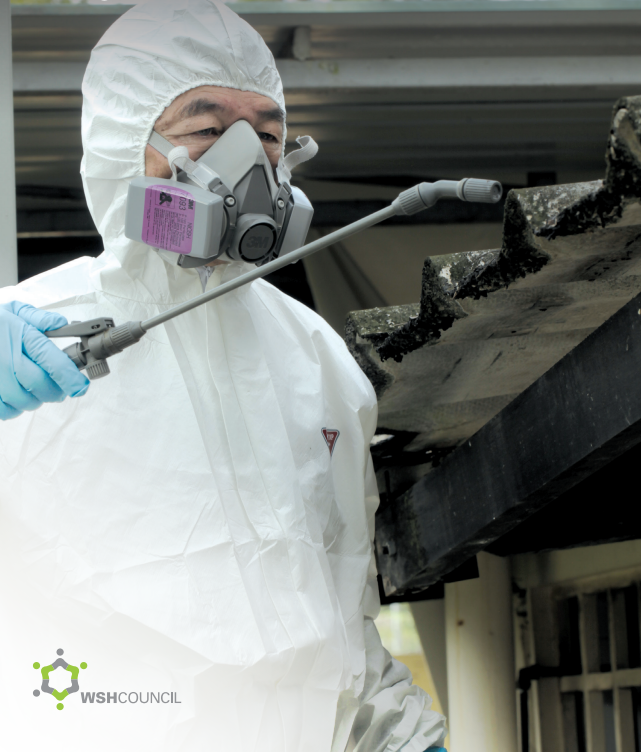
Apply appropriate removal methods such as wet, glove bag, injection, and other techniques.
Ensure the use of personal protective equipment (PPE), including disposable protective clothing and respirators, during asbestos removal.
Follow proper decontamination procedures and waste disposal protocols to prevent contamination.
Conduct air monitoring before, during, and after asbestos removal to assess exposure levels and ensure worker safety.
Provide training for workers involved in asbestos removal and medical surveillance to monitor health over time.