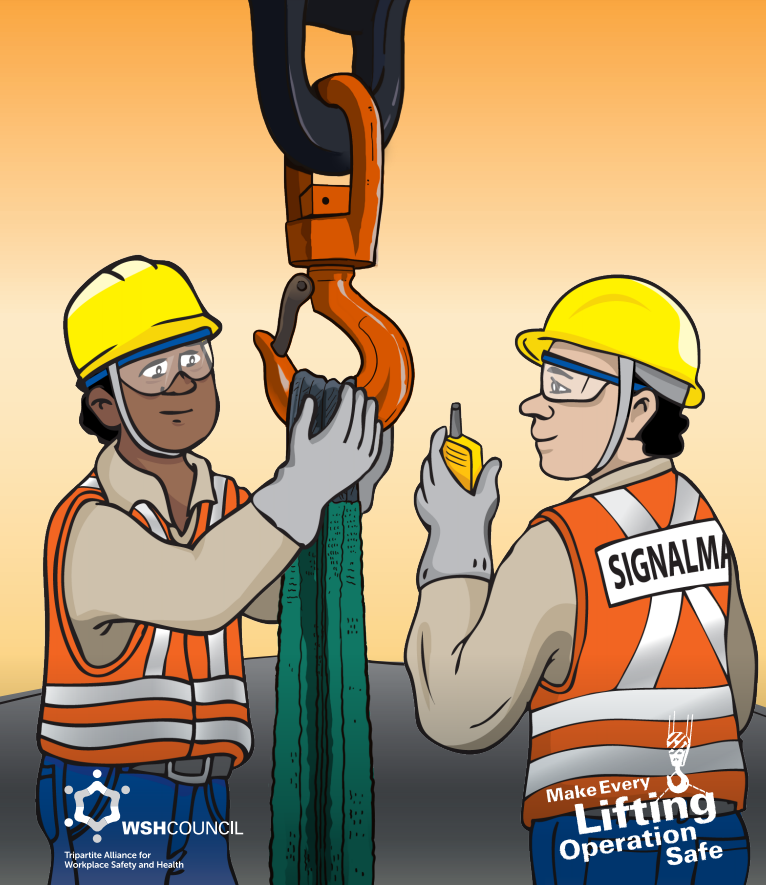
Module 1: Proper Attire for Rigger and Signalman
- Overview of the appropriate safety attire to wear for riggers and signalmen.
Module 2: Roles and Responsibilities of a Rigger
- Key duties of a rigger, including the preparation and securing of loads.
Module 3: Good and Bad Rigging Practices
- Best practices and common mistakes in rigging that could impact safety.
Module 4: Inspection of Hooks and Shackles
- Guidelines for inspecting hooks and shackles to ensure safety during lifting operations.
Module 5: Types of Wear and Tear for Wire Ropes
- Identifying wear and tear in wire ropes and the steps to take when damage is found.
Module 6: Roles and Responsibilities of a Signalman
- Responsibilities of the signalman in ensuring safe and effective communication during lifting.
Module 7: Recommended Crane Hand Signals
- Overview of standard crane hand signals used to communicate between riggers and signalmen.
Module 8: Good Communication Practices
- Tips for effective communication between rigging teams to ensure safety and accuracy.