

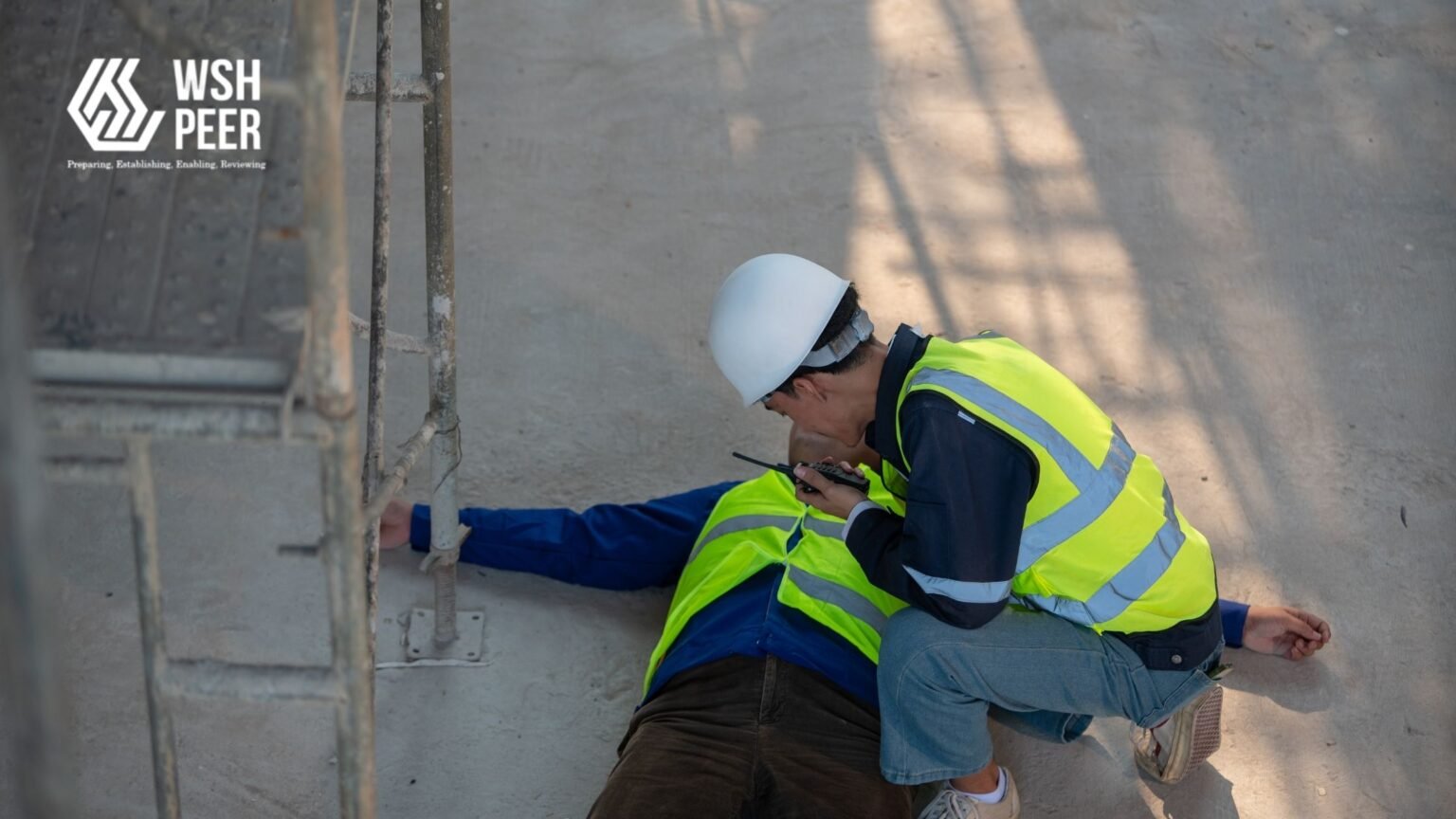
As industries across Singapore continue to face workforce changes, many organizations are hiring young workers, fresh entrants, interns, and foreign workers to support operational growth.
These employees bring energy, adaptability, and new perspectives. However, they also represent one of the groups most vulnerable to workplace incidents.
For employers in construction, manufacturing, logistics, marine, healthcare, and facility management, ensuring the safety of new workers is not just a compliance requirement—it is a business necessity.
The challenge is that many workplace incidents involving young workers are preventable. With the right workplace safety training, onboarding processes, and continuous learning strategies, organizations can significantly reduce risks and build a stronger safety culture from day one.
Why Are Young Workers More Vulnerable to Workplace Incidents?
Many employers assume that providing a basic safety briefing is sufficient for new employees.
However, workplace experience plays a critical role in hazard recognition and decision-making.
Young workers often face challenges such as:
- Limited exposure to workplace hazards
- Lack of confidence to raise safety concerns
- Inexperience with high-risk tasks
- Difficulty recognizing unsafe conditions
- Pressure to prove themselves in a new role
As a result, they may unknowingly place themselves in dangerous situations despite having good intentions.
This is why workplace safety training Singapore organizations implement must go beyond basic compliance requirements.
The Hazard Recognition Gap
One of the most common reasons young workers become involved in incidents is the inability to recognize hazards before they lead to accidents.
Experienced workers often identify risks instinctively because they have encountered similar situations before.
New workers do not yet have that advantage.
For example, a new employee may fail to recognize:
- Improperly secured materials
- Unsafe lifting practices
- Slip and trip hazards
- Machinery pinch points
- Work-at-height risks
- Electrical hazards
Without proper guidance, these hazards can be overlooked until an incident occurs.
Hazard recognition skills must therefore be developed intentionally through structured training and practical workplace exposure.
The Hidden Weakness in Many Onboarding Safety Programs
Most organizations conduct some form of orientation when new employees join.
However, many onboarding safety programs focus heavily on administrative requirements rather than practical workplace risks.
Typical onboarding sessions may cover:
- Company policies
- Emergency contact information
- General safety rules
- Organizational procedures
While these topics are important, they may not adequately prepare workers for the hazards they will encounter in their specific roles.
An effective onboarding safety program should include:
Site-Specific Hazard Awareness
Workers should understand the actual risks present in their work environment.
Task-Specific Safety Training
Training should focus on the activities employees will perform daily.
Practical Demonstrations
Workers learn more effectively when they see safe work practices in action.
Supervisor Engagement
Supervisors play a critical role in reinforcing safe behaviors during the first few weeks of employment.
Organizations that strengthen their onboarding safety program often see improvements in both safety performance and employee confidence.
Why Behaviour-Based Safety Matters for New Workers
Knowledge alone does not always lead to safe behavior.
Many incidents occur even when workers know the correct procedure.
This is where Behaviour-Based Safety (BBS) becomes valuable.
Behaviour-based safety focuses on:
- Identifying unsafe behaviors
- Reinforcing positive safety actions
- Encouraging open communication
- Creating accountability at all levels
For young workers, this approach helps establish safe habits early in their careers.
When supervisors consistently recognize and reinforce safe behaviors, workers are more likely to adopt those behaviors permanently.
Organizations that combine workplace safety training with behaviour-based safety initiatives often achieve stronger long-term results.
The Growing Role of Microlearning in Safety Training
Traditional classroom training remains important, but modern workplaces increasingly require flexible learning approaches.
This is especially true for frontline workers who have limited time for lengthy training sessions.
Microlearning delivers safety content in short, focused modules that can be completed quickly.
Examples include:
- 5-minute hazard recognition lessons
- Toolbox talk videos
- Mobile learning modules
- Interactive safety quizzes
- Incident case studies
Benefits of microlearning include:
- Higher engagement levels
- Better knowledge retention
- Easier access to learning materials
- Continuous reinforcement of safety concepts
For young workers who are already comfortable with digital technologies, microlearning can significantly improve learning effectiveness.
How to Measure Training Effectiveness
One of the biggest challenges employers face is determining whether safety training is actually improving workplace performance.
Many organizations track training attendance but fail to measure learning outcomes.
To evaluate training effectiveness, employers should monitor:
Knowledge Assessments
Measure whether workers understand key safety concepts.
Workplace Observations
Evaluate whether safe behaviors are being applied on the job.
Hazard Reporting Participation
Monitor whether workers actively identify and report risks.
Incident Trends
Analyze whether incident rates decrease following training initiatives.
Competency Verification
Ensure employees can safely perform assigned tasks before working independently.
Training should be viewed as an ongoing process rather than a one-time event.
Curious for more insights? Why Construction Safety Training Must Be Digitized in High-Risk Projects
Building a Strong Safety Foundation for Young Workers
Organizations that successfully reduce workplace incidents among young workers typically focus on five key areas:
- Structured onboarding safety programs
- Hazard recognition training
- Behaviour-based safety initiatives
- Continuous microlearning opportunities
- Measurement and improvement of training effectiveness
By combining these elements, employers can create an environment where new workers develop safety awareness, confidence, and competence more quickly.
Conclusion
Young workers are not necessarily less safety-conscious than experienced employees. In many cases, they simply lack the practical experience needed to identify hazards and respond effectively to workplace risks.
This is why workplace safety training Singapore employers provide should focus on more than compliance requirements.
By strengthening onboarding safety programs, improving hazard recognition skills, implementing behaviour-based safety strategies, and adopting modern learning methods such as microlearning, organizations can significantly reduce workplace incidents while building a stronger safety culture.
Investing in new worker safety training today helps create safer, more productive workplaces tomorrow.
Strengthen Safety Competency with PEER Training
Developing a safety-conscious workforce requires more than one-off training sessions.
PEER Training helps organizations deliver effective workplace safety learning through:
- Digital learning management systems
- Safety competency tracking
- Microlearning modules
- Training record management
- Workforce development programs
- Continuous learning pathways
Whether you manage construction teams, manufacturing operations, healthcare facilities, logistics personnel, or facility management workers, PEER Training provides the tools needed to build stronger safety competencies across your workforce.
Explore the PEER Training Learning Management System and discover how digital learning can improve safety performance for new and experienced workers alike.
