

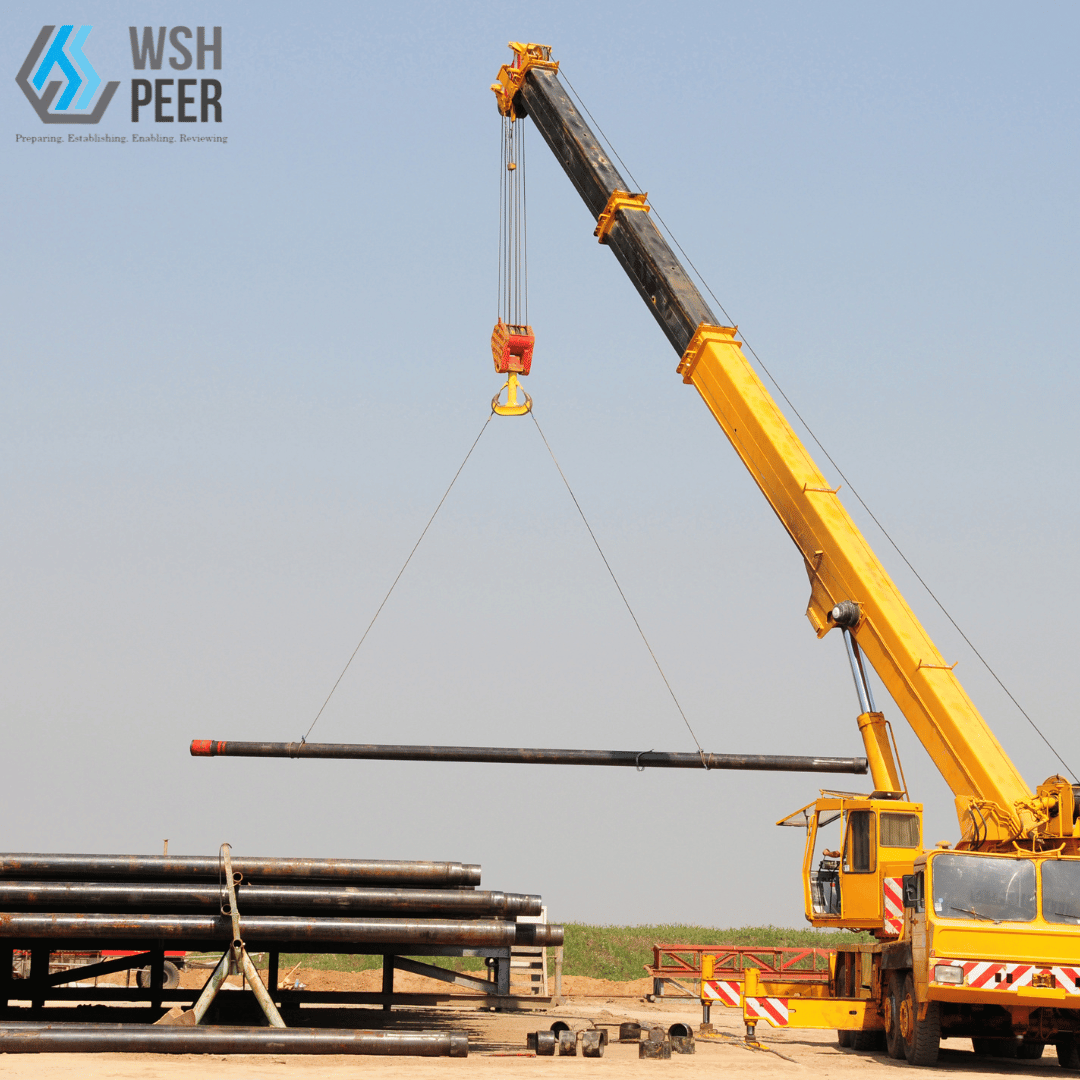
Common Hazards and Safety Protocols for Mobile Crane Lifting
Accidents involving mobile cranes are among the more common types of crane-related incidents. Many of these accidents occur due to either structural failures in the crane’s load-bearing parts or the toppling and collapsing of cranes when they become unstable. Below are some common hazards associated with lifting operations involving mobile cranes:
- Structural Failures:
- Failure of crane components such as the boom, jib, hydraulic rams, or wire rope, often due to overloading beyond the crane’s capacity.
- Stability Issues:
- Poor ground conditions (e.g., unstable ground)
- Failure to use or fully extend outriggers or stabilizers
- Failure to level the crane
- Rapid movements such as derricking, slewing, or maneuvering
- Overloading of the crane
- Bypassing safety devices
- High wind conditions
- Contact or Collision:
- Insufficient safe clearance space between the mobile crane and nearby structures, including other cranes or overhead power lines.
- Falling Objects:
- Resulting from improper securing of loads during lifting operations or while erecting or dismantling activities, posing a risk of injury to workers and the public.
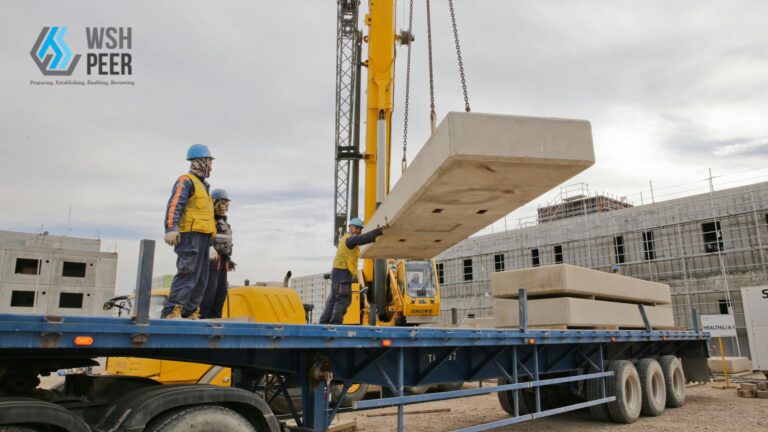
Lifting Plan
The purpose of a Lifting Plan is to facilitate common understanding amongst the lifting team for a safe lifting operation. It addresses some key factors affecting safe lifting operations such as:
- details of the load;
- details of the lifting equipment/ lifting gears used;
- means of communications;
- personnel involved in the lifting operation;
- physical and environmental considerations;
- sequence/ special precautions; and
- sketch of the zone of operation.
Lifting supervisors must brief the lifting team members, which typically consists of the crane operator, rigger and signalmen, on the Lifting Plan before commencement of any lifting operation.
The lifting supervisor must stop the lifting operation immediately if it deviates from the Lifting Plan that has been approved by the project manager.
Risk Assesment
Risk Assessment (RA) is the process of evaluating the likelihood and consequences of injury or illness arising from exposure to identified hazards, and determining appropriate risk control measures. The three basic steps of RA are:
- Hazard Identification
- Identify the hazards associated with each work activity and the potential accidents or incidents that could result. For example, hazards in lifting operations may include poorly maintained wire ropes, defective safety devices on cranes, and improper rigging methods.
- Risk Evaluation
- Estimate the risk levels of identified hazards in terms of the severity of potential injuries or damage and the likelihood of their occurrence. For instance, the risk of workers being underneath a suspended pre-cast component should be assessed as high, given the potentially fatal consequences if the load were to drop.
- Risk Control
- Determine appropriate risk control measures to reduce risk to an acceptable level. In the case of a suspended pre-cast component, establishing “safe exclusion zones” to prohibit workers from working directly underneath the load and clearly marking these zones to prevent unauthorized entry would be an effective control measure.
Permit-to-Work (PTW) System
The PTW system is designed to manage and control hazardous work, including lifting operations. The contractor’s supervisor coordinating the lifting operation must apply for a PTW to carry out the operation. The application should detail the scope and conditions of the operation. An independent on-site inspection is then conducted to verify that appropriate control measures have been implemented to mitigate foreseeable risks. Once these measures are confirmed, the application is approved by an authorized person, typically the project manager.
Workflow for PTW Application and Approval:
- Apply
- After conducting a proper RA and developing a written Lifting Plan, the supervisor coordinating the lifting operation must apply for permission from the project manager or site occupier. The application, including the Lifting Plan, is submitted to the site’s appointed safety assessor for evaluation.
- Assess and Inspect
- The appointed safety assessor, a Workplace Safety and Health (WSH) officer, or another competent person, will:
- Assess whether all reasonably practicable measures have been taken to ensure the safety and health of those involved in the lifting operation.
- Inspect the site, including its surroundings, with the supervisor to ensure the operation can be carried out safely.
- If satisfied, the assessor endorses the application and forwards it to the project manager.
- The appointed safety assessor, a Workplace Safety and Health (WSH) officer, or another competent person, will:
- Approve
- The project manager evaluates the endorsed application. If all necessary safety measures are in place, the PTW is approved and issued to the supervisor.
- Monitor
- The project manager continually reviews the progress of the lifting operation to ensure safety. The supervisor must ensure all safety measures remain in place throughout the PTW’s validity and inform the project manager upon completion of the operation.
- Revoke
- If the project manager determines that continuing the lifting operation poses or is likely to pose a risk to safety, health, or welfare, they may order the operation to cease immediately and revoke the PTW.
Under the WSH (General Provisions) Regulations, lifting equipment such as cranes, lifting appliances, and lifting gears must be inspected by an authorized examiner:
- At least once every 12 months.
- At least once every six months for lifting equipment that carries persons.
Additionally, an authorized examiner must inspect the lifting equipment:
- After modifications or repairs to its load-bearing components.
- When there is a change in equipment configuration, such as altering boom length or tower crane height.
- After any incident or accident involving the lifting equipment.
Digitize Your Workplace Safety
Simolify your WSH processes to stay compliant and audit-ready.Pre-use Inspection of Lifting Equipment
The lifting supervisor must ensure that the crane operator conducts a pre-use inspection before each lifting operation to confirm that the equipment is suitable, safe, and correctly installed. The pre-use checks should include:
- Visual inspection of the lifting equipment.
- Functional test of the lifting equipment.
- Functional test of the safety systems and devices.
- Functional test of the emergency stop device.
Lifting gears must also be inspected to ensure they are free of faults or defects before any lifting operation begins.
If any defects are identified during the pre-use checks, the lifting supervisor must not allow the lifting operation to proceed until all faults are fully rectified. Similarly, lifting gears must not be used if defects are spotted and reported by the riggers.
