

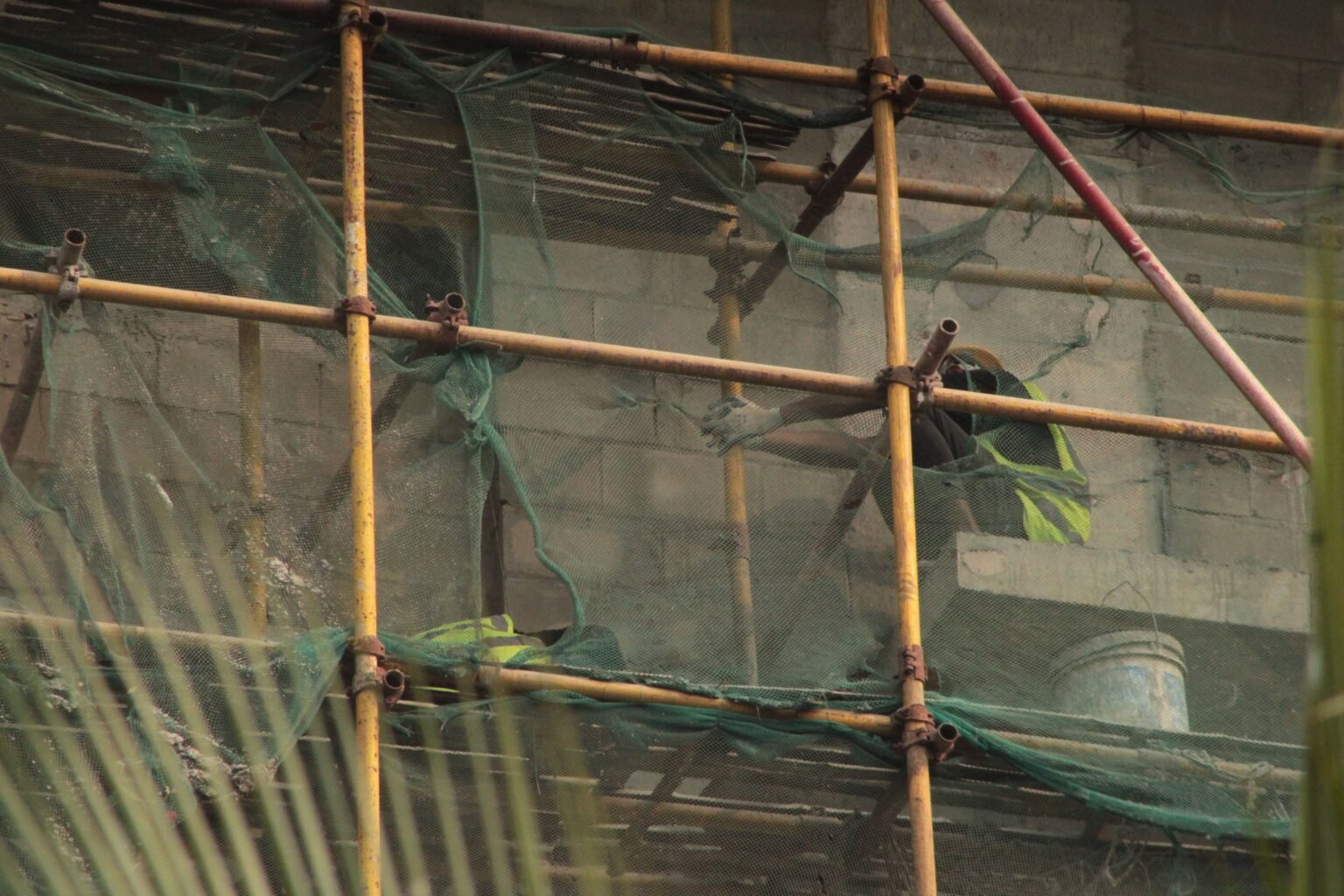
A scaffolding keamanan daftar periksa is the difference between a scaffold that is inspected and one that is merely assumed to be safe. Scaffolds change daily as materials are loaded, ties are removed, and netting is added, so a check done last week says little about today. And from 1 March 2027, Singapura adds a new item to the list: fire-retardant scaffold netting on newly awarded projects.
In this guide: What is new · 12-point checklist · Quick quiz · Preparing for the netting rule · Records · FAQs
Key takeaways
- Check the scaffold before every shift, not only at formal inspeksi.
- MOM will require fire-retardant scaffold netting for newly awarded projects from 1 March 2027.
- Netting must be tested to one of three international fire test standards that MOM and SCDF have identified.
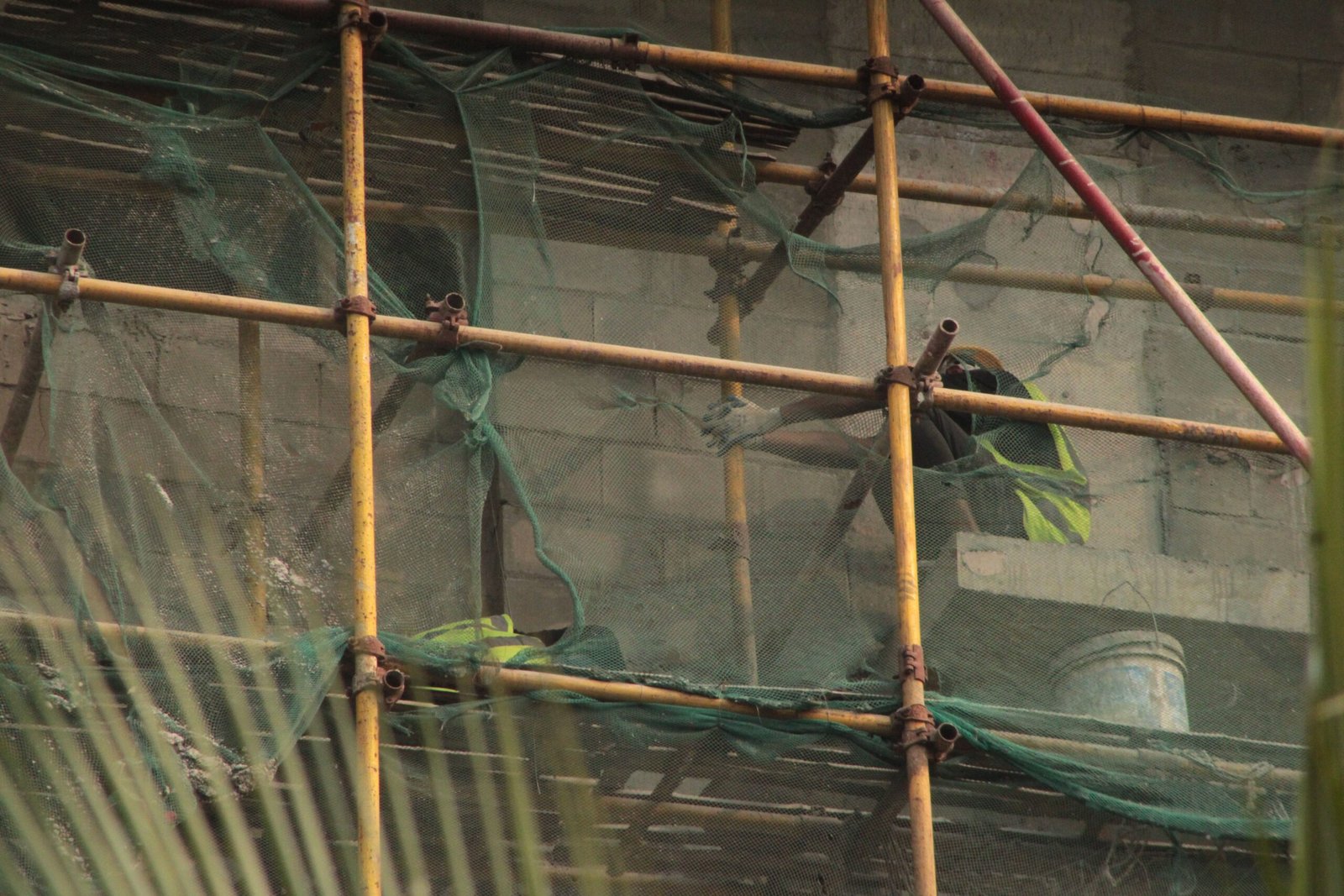
What Is New: MOM’s Fire-Retardant Netting Rule
At the Keselamatan Kerja and Health Awards on 24 September 2026, Minister of State for Manpower Dinesh Vasu Dash announced that MOM will require scaffold netting to be made of fire-retardant materials for newly awarded projects from 1 March 2027. Here is what was stated:
- Occupiers, scaffold kontraktor, manufacturers, and suppliers must ensure the netting used has been tested to one of three established international fire test standards identified by MOM and the Singapore Civil Defence Force (SCDF).
- MOM will issue a circular setting out the scope, the acceptable fire test standards, and compliance measures, including labelling and sertifikasi requirements.
- This comes with a reduction in the duration of timber scaffold usage, which MOM announced in July 2026.
The speech did not give the circular’s details, so check MOM’s announcement and its website for the final requirements before you finalise purchasing.
Scaffolding Safety Checklist: 12 Checks Before Every Shift
Adapt this list to your scaffold design and the requirements that apply to your site, including the WSH (Scaffolds) Peraturan.
| # | Check | What good looks like | Red flag |
|---|---|---|---|
| 1 | Foundation and base | Base plates on firm, level ground or sole boards | Soft ground, settling, missing base plates |
| 2 | Standards (uprights) | Plumb and spaced as designed | Leaning or bent members |
| 3 | Ledgers, transoms, couplers | Complete and tight | Loose or missing couplers |
| 4 | Bracing | All bracing in place as designed | Bracing removed for convenience |
| 5 | Ties to the structure | Ties in place at designed positions | Missing, loose, or altered ties |
| 6 | Working platforms | Fully decked, secured, free of damage | Gaps, damaged or loose boards |
| 7 | Perlindungan tepi | Guardrails, midrails, and toe boards on every open edge | Missing rails or toe boards |
| 8 | Safe access | Proper ladder or stair access | Workers climbing the frame |
| 9 | Loading | Load limits known; materials spread and stacked safely | Heavy material stacked on one bay |
| 10 | Inspeksi tag and record | Current inspection by a competent person, clearly displayed | No tag, expired tag, or altered scaffold since last inspection |
| 11 | Netting and sheeting | Secured and undamaged; for new projects from 1 March 2027, fire-retardant with the required labelling and certification | Torn netting, missing label or test certificate |
| 12 | Fire, electrical, and housekeeping | Panas pekerjaan controlled near netting; safe distance from overhead lines; area tidy | Hot work beside netting with no controls |
Related: alongside your scaffolding safety checklist, if crews work from platforms, also see the Checklist inspeksi MEWP dan Checklist peralatan pelindung jatuh.
Quick Quiz: Spot the Problem
Test your scaffolding safety checklist knowledge. Read each situation, decide what you would do, then click to compare.
1. Every bay has guardrails, but one bay has no toe boards. Is the scaffold fine to use?
No. Toe boards stop tools and materials from falling off the platform. Fix the gap or restrict access to that bay before use, and record the finding.
2. On a project awarded after 1 March 2027, new netting arrives with no fire test label. What do you do?
Do not install it. Ask the supplier for the fire test certification and labelling that MOM requires, check it against the circular, and hold the netting until it is verified. Record the check.
3. The inspection tag expired yesterday, but the scaffold looks fine. Can the crew continue?
Treat it as not cleared for use until a competent person re-inspects it. A scaffold can look sound and still have changed since the last inspection.
How to Prepare for the 2027 Netting Requirement
- Audit your current netting. List what you hold and where it came from.
- Talk to suppliers early. Ask which fire test standards their netting meets and what certificates and labels come with it.
- Add a label check at delivery. Make verification part of receiving, not an afterthought on site.
- Update your scaffolding safety checklist. Add the netting check to the daily and pre-use list.
- Brief supervisors and scaffold crews on why the rule exists and how to spot non-compliant netting.
- Watch for MOM’s circular and adjust procedures once the details are published.
Records to Keep with Your Scaffolding Safety Checklist
- Inspection date, inspector, and result
- Defects found, who owns the fix, and when it was closed
- Modifications since the last inspection
- Netting delivery records, including labels and test certificates
- Photos of the scaffold condition where helpful
Running the Scaffolding Safety Checklist Digitally
Paper scaffolding checklists get wet, lost, and filled in after the fact. A digital checklist time-stamps each inspection, attaches photos, and turns a defect into a tracked action with an owner and due date. You can browse ready-made forms in the PEER checklist catalogue and adapt them to your own scaffold types.
Scaffolding Safety Checklist FAQs
What should a scaffolding safety checklist include?
Foundation, structure, bracing, ties, platforms, edge protection, access, loading, inspection records, netting, and fire, electrical, and housekeeping hazards.
When does the fire-retardant scaffold netting rule start?
MOM says it will apply to newly awarded projects from 1 March 2027.
Who is responsible for compliant scaffold netting?
MOM states that occupiers, scaffold contractors, manufacturers, and suppliers must ensure the netting has been tested to an accepted fire test standard.
How often should a scaffolding safety checklist be used?
Before every shift, in addition to the formal inspections your regulations require, and after any change to the scaffold or adverse weather.
Next Steps
Build your scaffolding safety checklist by adapting a form from the PEER checklist catalogue, and read our guide to building a robust working at height programme. For the official announcement, see MOM’s opening address at the WSH Awards 2026.
