

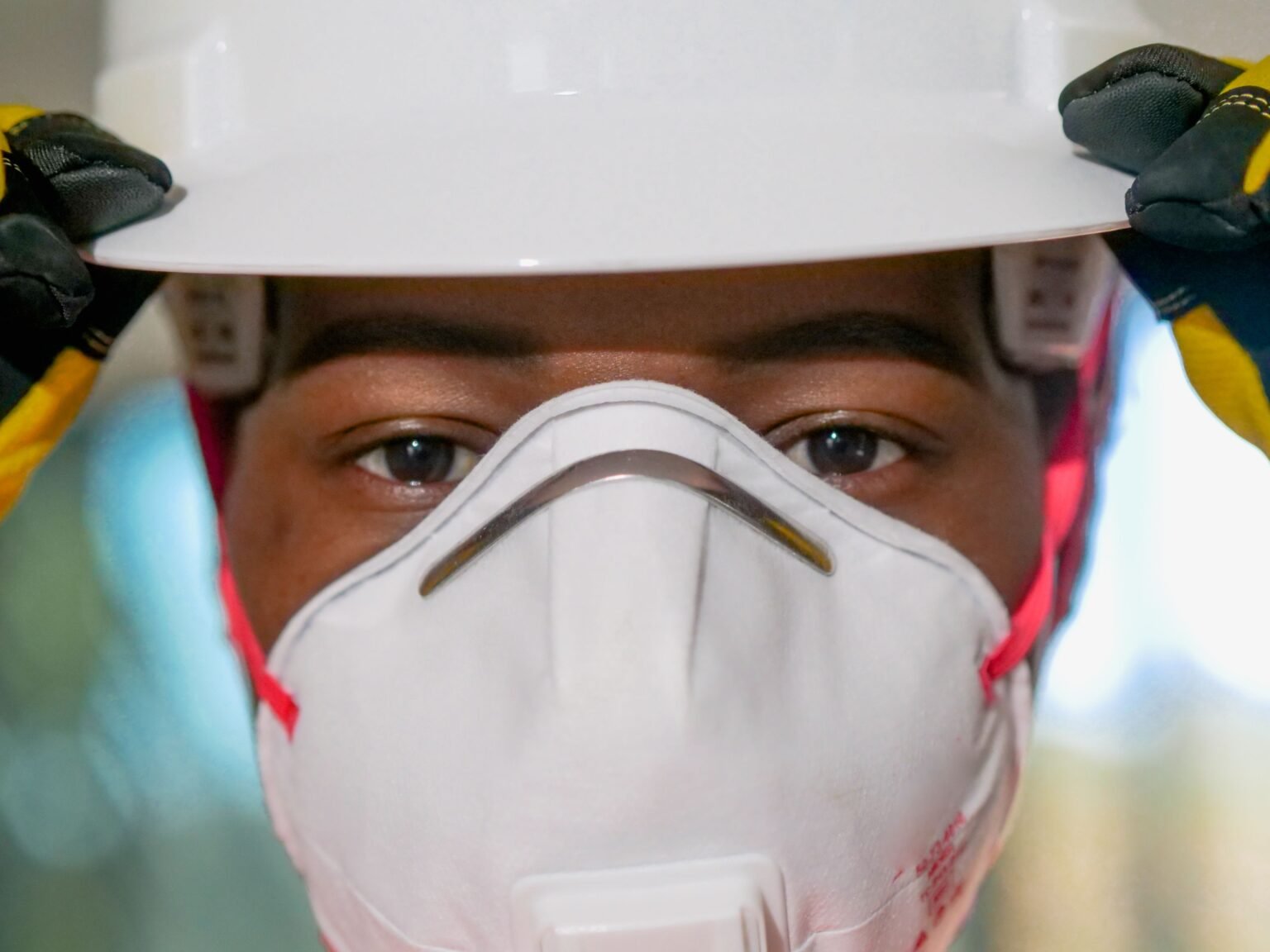
With haze affecting Singapura, Malaysia, and parts of Indonesia, many employers are handing out N95 masks to outdoor workers. But a mask only protects if it seals against the face, and that is what respirator fit testing checks. A worker wearing an N95 that leaks around the edges breathes in much of the same polluted air as someone wearing nothing.
This guide explains what respirator fit testing is, what workers must be trained to do, and what records to keep. It draws on the Ministry of Manpower’s (MOM) haze guidelines for employers, and the principles apply to any tempat kerja where respirators are used.
Why Respirator Fit Testing Matters
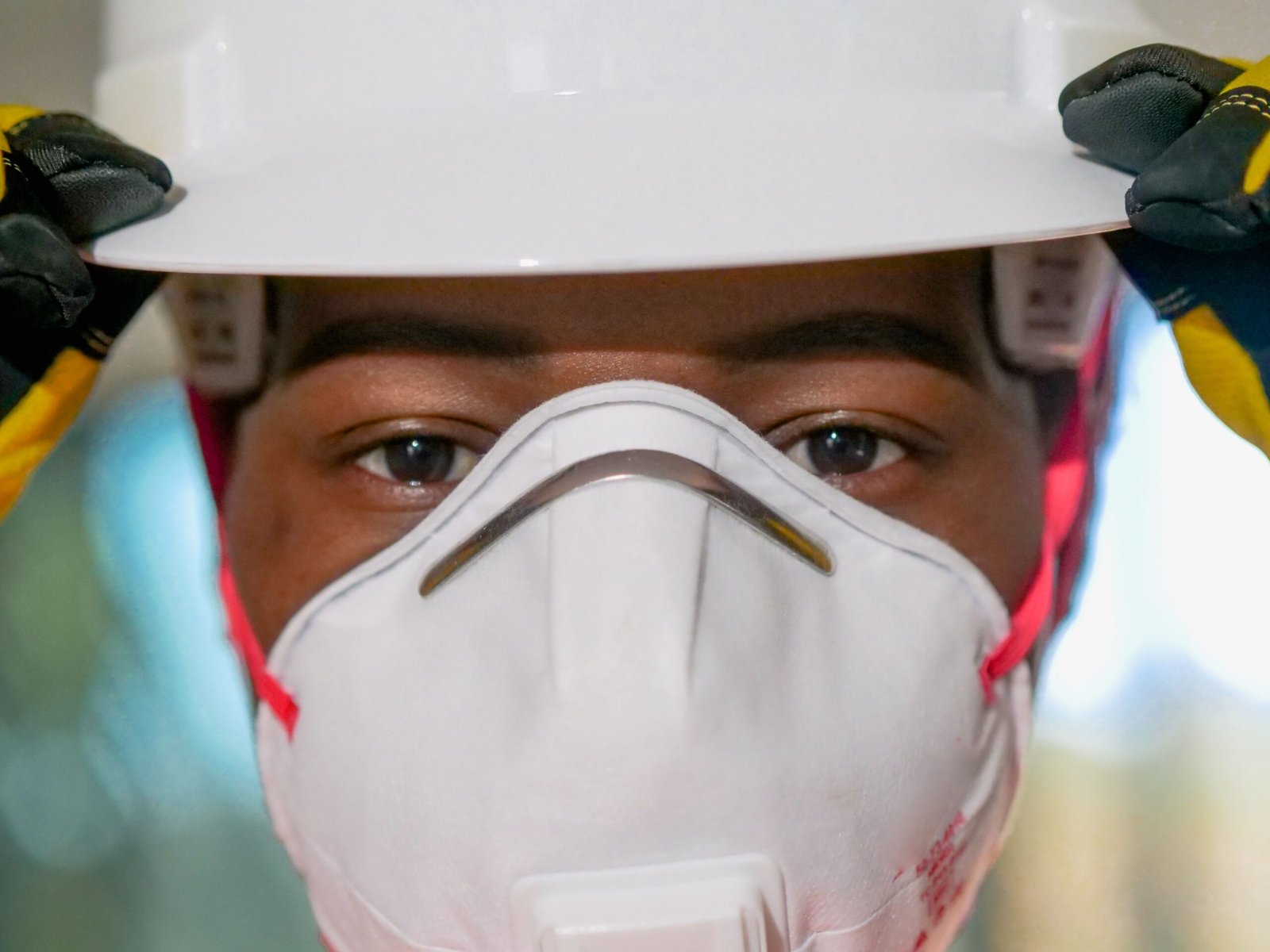
An N95 mask is designed to filter about 95% of very fine particles, but only when air has to pass through the filter. If the edges do not seal, air takes the easier route around it. Faces differ in shape and size, so one model will fit some people well and others poorly. Fit testing finds out which model and size works for each worker.
MOM’s haze guidelines tell employers to ensure that employees who need masks or respirators are fit-tested, that sufficient stock is available, and that pelatihan and supervision are provided to ensure correct use.
What Is Respirator Fit Testing?
Respirator fit testing is a check that a specific respirator, in a specific size, seals properly on a specific person’s face. There are two common approaches:
- Qualitative tests rely on the wearer’s response to a test substance, such as a taste or smell, if it leaks into the mask. They are pass or fail.
- Quantitative tests use an instrument to measure how much air leaks in and give a numerical result.
Fit testing is different from the user seal check, which the wearer does every time they put the respirator on. Both matter, and training should cover both.
When Respirator Fit Testing Should Happen
- Before a worker first uses a tight-fitting respirator
- When switching to a different model, brand, or size
- When something changes the face, such as significant weight change, dental pekerjaan, or facial scarring
- At the intervals required by your local rules or company procedure
Requirements vary by country and sector, so confirm what applies to your workplace.
What Respirator Fit Testing Training Should Cover: 8 Modules
1. Why the Respirator Is Needed
Explain the bahaya in plain terms: fine particles from haze or dust can reach deep into the lungs. Workers who understand the reason are more likely to wear it properly.
2. Choosing the Right Type
MOM says the correct mask for fine particles such as PM2.5 and PM10 is one that filters about 95% of very fine particles, such as an N95 or equivalent. Workers should know that surgical masks and cloth masks are not substitutes.
3. Putting It On Correctly
Demonstrate positioning, strap placement, and nose clip adjustment. Let each worker practise while an instructor watches.
4. The User Seal Check
Teach the check to do every time the respirator is worn. If air escapes around the edges, the worker readjusts and checks again before starting work.
5. Facial Hair and Other Seal Problems
Beards and stubble that cross the sealing area can prevent a tight seal. Workers need to know this before the fit test, not after. Glasses, headwear, and other equipment can also interfere.
6. Limits of an N95
MOM notes that an N95 has a protection factor of 10 and may not provide sufficient protection in hazardous haze conditions. For prolonged outdoor work when the 24-hour PSI is above 400, it suggests considering respirators with a higher protection factor, such as full face respirators. Workers should understand that a respirator reduces exposure but does not make an unsafe condition safe.
7. Breathing Effort, Breaks, and When to Stop
Masks increase breathing resistance, which can cause discomfort, tiredness, or headache during physical effort. MOM advises regular breaks, a slower pace, and hydration, and says workers who have trouble breathing should be moved indoors. Elderly and pregnant workers, and those with chronic heart or lung disease, should consult their doctors about using masks.
8. Replacing, Storing, and Maintaining
Masks should be changed when soiled or physically damaged, or when the wearer finds it hard to breathe. Teach workers how to store them cleanly. MOM refers to Singapore Standard SS 548:2022 for the selection, use, and maintenance of respiratory protective devices.
How to Deliver the Training
- Combine theory and hands-on practice. Reading about a seal check is not the same as doing one.
- Train in small groups so the instructor can see each worker’s technique.
- Use supervisors for follow-up. MOM calls for supervision to ensure correct use after the session.
- Check understanding by asking workers to demonstrate and to explain when to replace a mask.
Records to Keep
- Worker name and employer
- Date of the fit test and the method used
- Respirator make, model, and size that passed
- Name of the person who conducted the test
- Result and the date the next test is due
- Training attendance and the content delivered
- Mask stock levels and issue records
Without these records, you cannot show that workers were issued the right respirator or trained to use it.
Common Respirator Training Mistakes
- Handing out masks with no fit test. Distribution is not protection.
- One size for everyone. A mask that fits one worker may leak on another.
- Ignoring facial hair. Workers with beards may need a different type of respirator.
- No supervision afterwards. Good technique fades without follow-up.
- Treating an N95 as sufficient in every condition. Check the limits for the conditions you face.
Respirator Fit Testing FAQs
What is respirator fit testing?
It is a test that checks whether a specific respirator seals properly on a specific person’s face, using either a qualitative or a quantitative method.
Is respirator fit testing the same as a seal check?
No. Fit testing is done by a trained tester to select a suitable respirator. A user seal check is done by the wearer each time they put it on.
Do workers with beards need respirator fit testing?
Facial hair across the sealing area can prevent a tight seal, so workers who need tight-fitting respirators may need to be clean-shaven or use a different type of respirator.
How often should respirator fit testing be repeated?
Check local rules and your company procedure. Retest when the respirator model or size changes, or when the wearer’s face changes significantly.
Next Steps
For the full employer picture during haze, read our guide to the MOM haze guidelines and MOM’s own guidelines for employers on protecting employees from haze. To build the wider training sistem, see our guides on safety induction training, the PPE inspection checklist, dan HSE training records and worker competency. For general occupational keamanan guidance, visit OSHA.
