

With haze affecting air quality across the region this month, Singapore employers are being reminded to review how they protect outdoor workers. The MOM haze guidelines set out what employers should do before and during a haze episode, from risk assessment and mask supply to when outdoor work should be reduced or avoided. This guide to the MOM haze guidelines summarises the key points so site and HSE teams can act quickly.
It was reviewed in October 2026 against MOM’s published guidelines, which MOM last updated on 8 September 2026. Always check the current PSI and MOM’s pages before making decisions on site.
What the MOM Haze Guidelines Say About Employer Responsibility
Under the Workplace Safety and Health (WSH) Act, the primary responsibility for an employee’s safety and health at work lies with the employer. MOM expects employers to carry out a proper risk assessment and implement suitable measures, including specifying when to restrict work. The guidelines give general measures. Employers should add others based on their work requirements and the health conditions of their employees.
The reference is the revised 24-hour Pollutant Standards Index (PSI) issued by the National Environment Agency (NEA).
Preparing for Haze Under the MOM Haze Guidelines
After NEA announces an increased risk of haze, MOM recommends that employers:
- Identify susceptible employees, meaning those with chronic heart or lung disease, elderly employees, and pregnant employees.
- Identify the types of outdoor work to be reduced when there is haze.
- Determine criteria for restricting outdoor work.
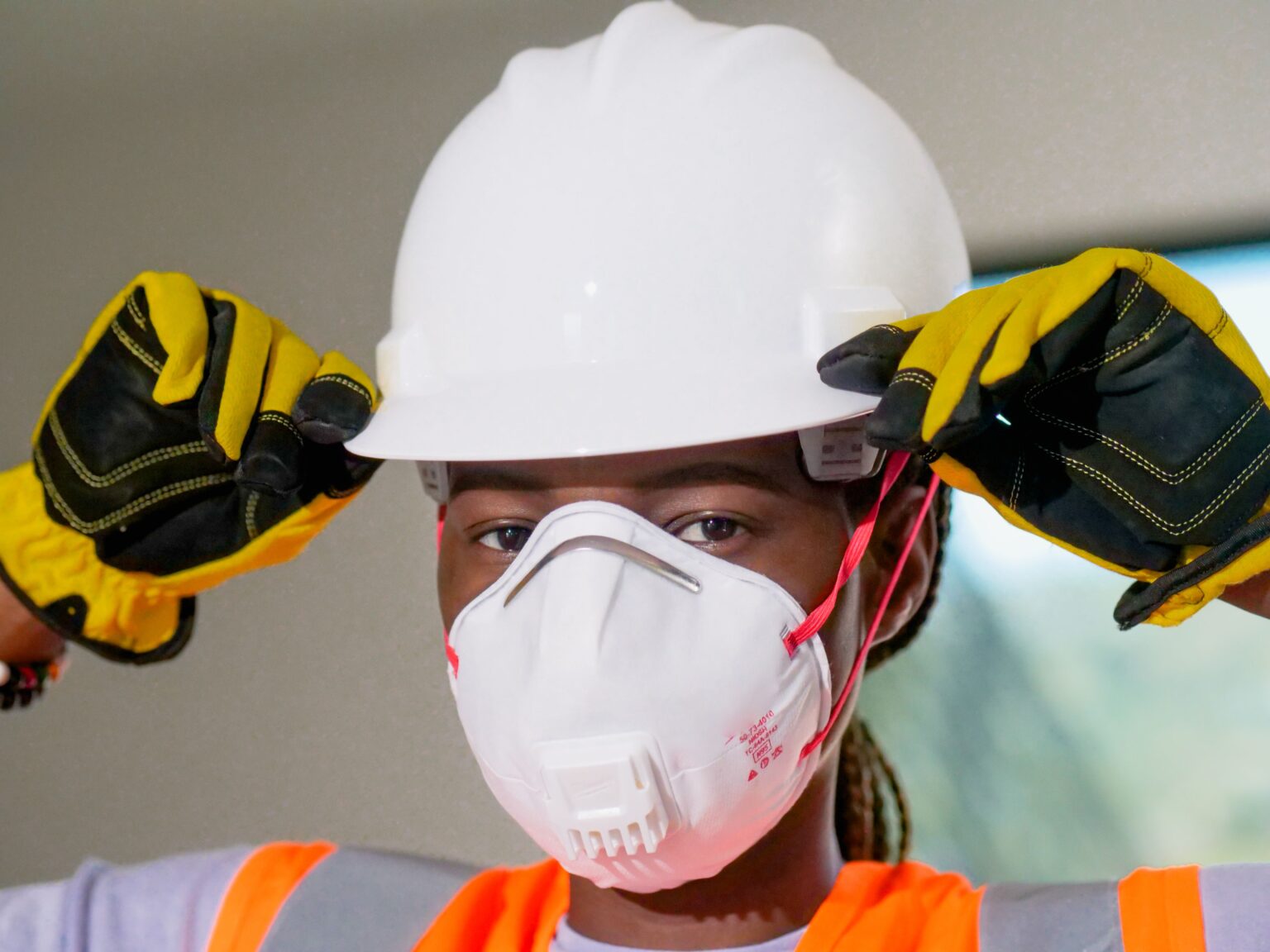
- Conduct mask fit testing for employees who must still work outdoors, and keep at least a one-week supply of N95 masks as part of the company’s haze business continuity plan.
- Improve the efficiency of air cleaning devices.
- Set up a haze communication system between employer and employees.
MOM Haze Guidelines by 24-Hour PSI Level
MOM’s overview table links the PSI reading to how outdoor work should be treated. In MOM’s wording, “reduce” means do less, “minimise” means do as little as possible, and “avoid” means do not do. “Prolonged” means continuous exposure for several hours.
| 24-hour PSI | Healthy employees | Elderly or pregnant employees | Chronic heart or lung disease |
|---|---|---|---|
| 100 or below (Good / Moderate) | Normal activities | Normal activities | Normal activities |
| 101 to 200 (Unhealthy) | Reduce prolonged or strenuous outdoor work | Minimise prolonged or strenuous outdoor work | Avoid prolonged or strenuous outdoor work |
| 201 to 300 (Very Unhealthy) | Avoid prolonged or strenuous outdoor work | Minimise outdoor work | Avoid outdoor work |
| Above 300 (Hazardous) | Minimise outdoor work | Avoid outdoor work | Avoid outdoor work |
Conditions can change during a working day, so factor fluctuations into your risk assessment rather than relying on a single morning reading.
Managing Outdoor Work Under the MOM Haze Guidelines
When prolonged or strenuous outdoor work cannot be avoided, MOM gives examples of risk-mitigating measures:
- Use mechanical aids such as trolleys and hoists instead of manual lifting or carrying.
- Adjust work assignments or rotate jobs to shorten time spent outdoors.
- Schedule sufficient indoor rest breaks.
- Ensure adequate hydration.
- Encourage workers to report symptoms, and monitor their health.
- Defer non-essential work.
At hazardous levels, MOM also points to job redeployment, reducing the intensity and duration of outdoor work, and regular indoor rest breaks. Visibility matters too: risk assessments should consider whether outdoor lifting operations involving tower and mobile cranes should cease because of poor visibility.
Masks and Respirators in the MOM Haze Guidelines
Where masks are warranted, employers must provide suitable ones. For fine particles such as PM2.5 and PM10, MOM says the correct type is one capable of filtering about 95% of very fine particles, such as an N95 mask or equivalent. Key points from the guidelines:
- Fit-test and supply. Employees who need masks or respirators should be fit-tested, and sufficient stock should be available.
- Train and supervise. Provide training and supervision to ensure correct use.
- Replace when needed. Change masks when they are soiled or physically damaged, or when the wearer finds it hard to breathe.
- Know the limits of an N95. MOM notes that an N95 mask has a protection factor of 10 and may not give sufficient protection in hazardous conditions. It suggests respirators with a higher protection factor, such as full face respirators, for prolonged outdoor work when the 24-hour PSI is above 400.
- Allow for breathing effort. Masks increase breathing resistance. Consider regular breaks, a slower pace, and hydration, and move workers indoors if they struggle to breathe.
- Consult a doctor where needed. Elderly and pregnant employees, and those with chronic heart or lung disease, should consult their doctors on mask use.
MOM refers employers to Singapore Standard SS 548:2022 for the selection, use, and maintenance of respiratory protective devices. Provide suitable eye protection if eye irritation occurs, and consider how it interacts with masks.
Protecting Indoor Work and Keeping Workers Informed
To reduce haze entering indoor spaces, keep windows and doors closed most of the time and consider air cleaning devices following NEA’s guidance. MOM also recommends a system to update employees regularly on the measures in place, including flexible work arrangements, with a channel for employees to report adverse effects.
What Records to Keep
If MOM or a client asks how you applied the MOM haze guidelines, you need evidence of decisions, not recollection. Useful records include:
- The PSI reading used and the time it was checked
- The risk assessment and the criteria for restricting outdoor work
- Mask fit-test records and stock levels
- Training attendance on mask use
- Rest breaks, redeployments, and deferred work
- Employee feedback or symptom reports
A digital checklist makes this easier because readings and checks are time-stamped on a phone and searchable later. PEER’s configurable checklists can be used for daily haze checks, and its PPE inspection checklist guide explains how to inspect protective equipment before use.
MOM Haze Guidelines FAQs
Are the MOM haze guidelines mandatory?
MOM presents them as general measures rather than fixed requirements. However, employers remain responsible under the WSH Act for assessing risks and protecting employees, and MOM has indicated that failing to manage haze risks adequately may lead to enforcement action.
Which PSI reading do the MOM haze guidelines use?
They refer to the revised 24-hour PSI issued by NEA.
Should employers provide N95 masks?
Employers should provide suitable masks where warranted. MOM recommends fit testing and at least a one-week supply of N95 masks as part of the haze business continuity plan.
Who is most at risk during haze?
Elderly employees, pregnant employees, and those with chronic heart or lung disease.
Where to Check Current Guidance
Read MOM’s full guidelines for employers on protecting employees from haze and the tripartite advisory on haze-related workplace measures, and check the 24-hour PSI on NEA’s website. For related guidance, see our articles on what a toolbox meeting is and safety induction training.
